How to eliminate friction and increase near-miss reporting by turning safety into a conversation

On this blog
Every safety leader knows the gap between reported incidents and what actually happens on the frontline. Near-misses and small hazards occur daily, yet most never make it into EHS systems, not because workers don’t care, but because reporting interrupts their work.
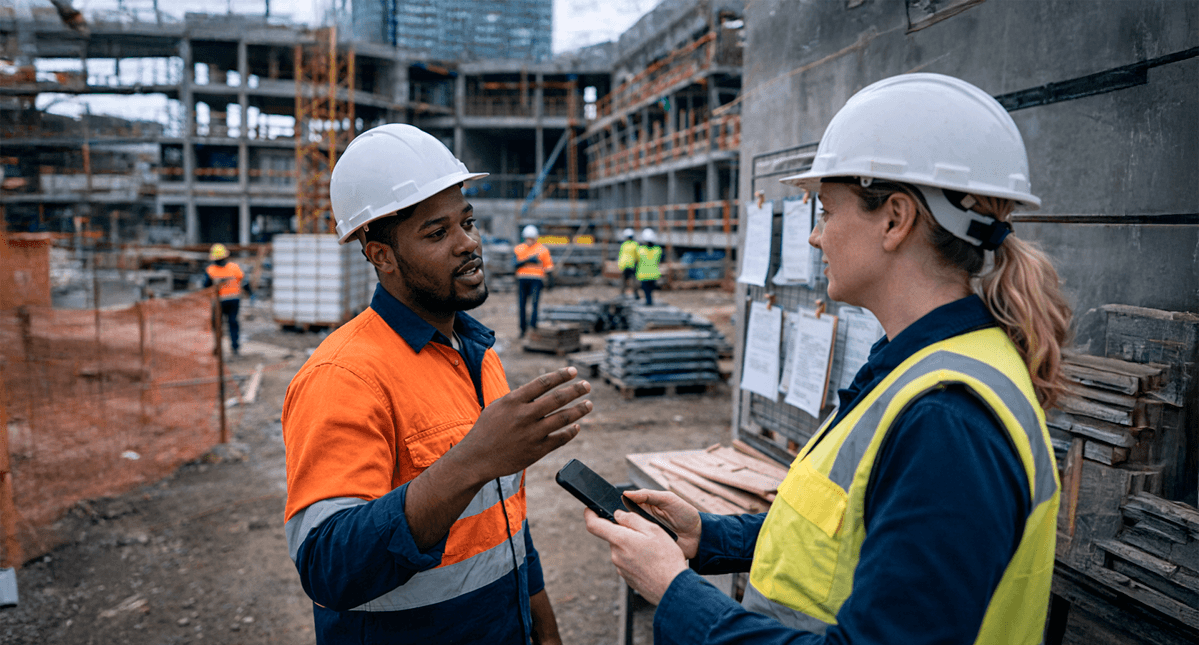
Frontline teams are focused on keeping production moving and staying safe. If reporting requires removing gloves, finding a device, logging in, and navigating forms, most workers will fix the issue and move on.
The result is a dangerous data drought. Early warning signs remain invisible until they escalate into serious incidents. Increasing near-miss reporting frequency requires one thing above all else: eliminating friction.
Why traditional safety reporting breaks down
Most EHS software is built for the desk, not the deskless worker who makes up the majority of the industrial workforce.
These systems fail because they ignore three frontline realities:
Hands-busy workflows
Workers handle tools, machinery, and materials. Screen-based input and multi-step forms disrupt work and get skipped.
Noisy environments
Factories, mines, and construction sites are loud. Voice systems that can’t function in high-noise conditions are unusable in practice.
Multilingual teams
Many sites operate with multiple languages on the same shift. Single-language interfaces reduce participation and accuracy, trapping critical safety data.
When reporting feels like a separate task, it stops happening. And when near-misses go unreported, organizations lose their most valuable leading indicators of risk.
Turning safety reporting into a natural action
The solution is not more forms: it’s hands-free, conversational reporting.
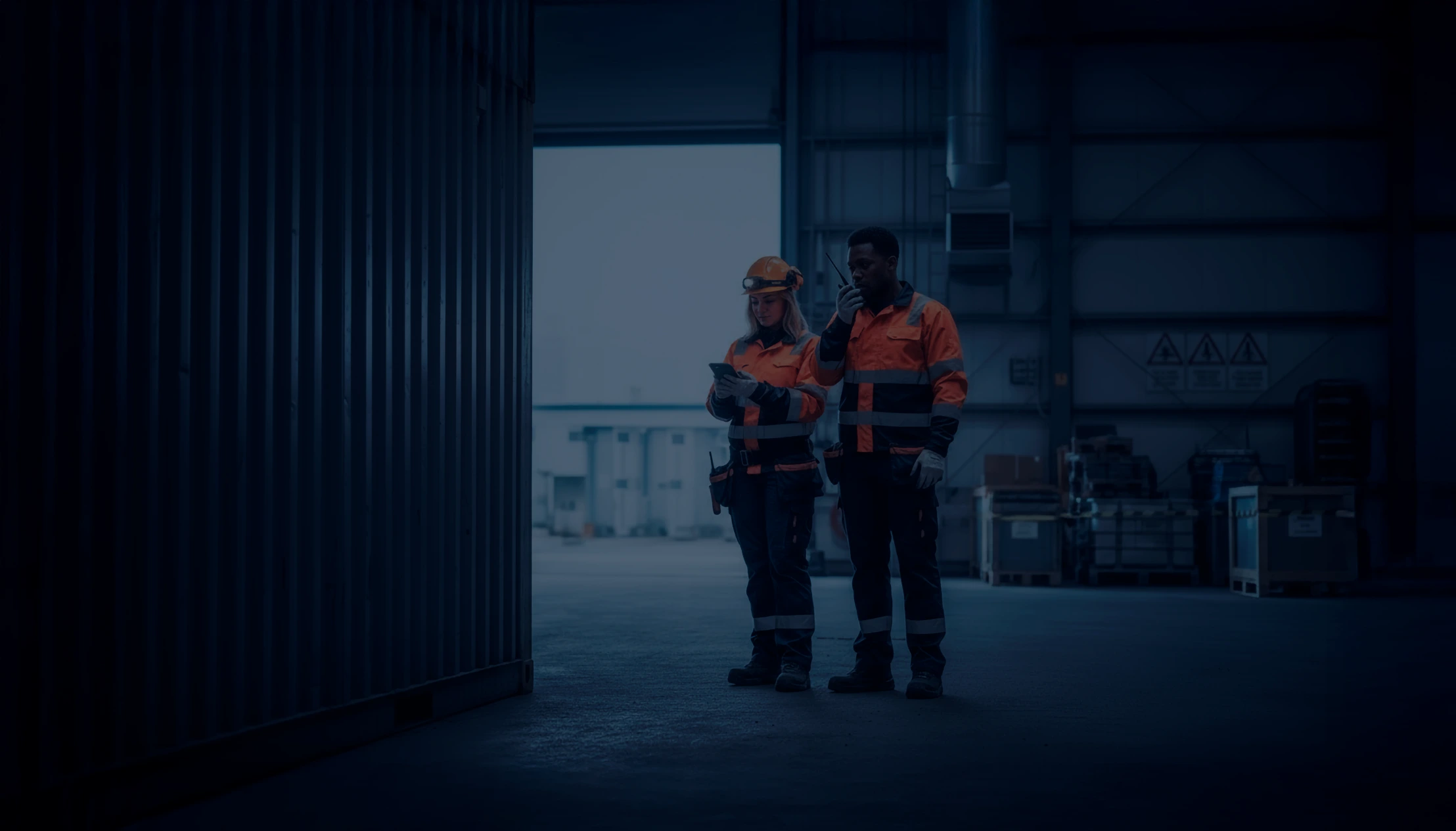
By allowing workers to report hazards as naturally as speaking, safety becomes part of the job rather than an interruption to it. The most effective systems leverage devices workers already use, such as radios, phones, or intercoms.
Best practices for frictionless near-miss reporting
Make reporting immediate: a worker should be able to report a hazard the moment they see it: “Report near-miss in Zone 3: loose hose on the floor.” No stopping work. No navigating screens.
Structure data automatically: the value isn’t just capturing voice: it’s transforming spoken input into structured data that flows directly into EHS, CMMS, or ERP systems for analysis and action.
Support multiple languages: accepting and responding in multiple languages removes participation barriers and dramatically increases reporting frequency across diverse teams.
Beyond logging: AI-driven safety in real time
Reducing friction is only the first step. Modern safety systems must move from passive record-keeping to active systems of action. When a worker reports an issue, the system should respond, not just record.
Practical AI applications for frontline safety
Real-time safety guidance: if a worker reports a buzzing electrical panel, the system should immediately provide approved safety instructions and escalation steps, reducing response time and exposure.
Reducing human error: AI can surface the correct procedural steps from approved SOPs and manuals, minimizing reliance on memory or informal knowledge during high-pressure situations.
Auditability and trust: in safety-critical environments, AI must:
Restrict responses to approved documents
Confirm captured information with the worker before submission
The operational impact for EHS and operations leaders
Eliminating reporting friction delivers measurable results:
Higher near-miss reporting frequency, revealing risk earlier
Richer safety data, captured through natural language instead of checkboxes
Faster maintenance response, as voice-reported issues are routed instantly into work order systems
A more inclusive safety culture, where every worker can participate regardless of language or literacy
This leads to better decision-making, reduced downtime, and safer operations.
Platforms designed for frontline reality
Scaling conversational safety reporting requires platforms built specifically for industrial environments.
Industrial conversational platforms like Tandm act as a unified layer between frontline workers and enterprise systems, connecting people, processes, and data without disrupting work.
By running on existing devices, integrating seamlessly with current systems, and requiring minimal training, these platforms remove friction instead of adding another tool to manage.
Conclusion: the future of near-miss reporting
The future of safety is not more forms or stricter enforcement, it is capturing what workers already say and see in real time.
By turning safety into a conversation, organizations can dramatically increase near-miss reporting frequency, surface risk earlier, and build safer, more reliable operations.
Created by Nikhil Riley
More to explore